Procurement 2026: Roles, Risks and Skills Every Professional Needs
Written by Matthew Hale
- Procurement 2026- The Rise of Procurement Technology
- The Role of Procurement Professionals in 2026
- Procurement Challenges Expected in 2026
- Essential Procurement Skills for 2026
- Procurement Trends for 2026
- How Procurement Professionals Can Prepare for 2026
- Conclusion
Procurement is entering one of the biggest periods of change the function has ever seen.
With rising costs, an unpredictable supply chain, and growing sustainability demands, its role is now more critical than ever. Procurement is no longer just about buying- it's a strategic function that manages risk, strengthens supplier relationships, and supports smarter decisions.
To understand how the function is evolving, it is important to look at the forces driving this shift and what the future of procurement expects from professionals. This blog explores the changing role, the challenges ahead, the skills needed for 2026, and why upskilling, including certification, matters more than ever.
Procurement 2026- The Rise of Procurement Technology
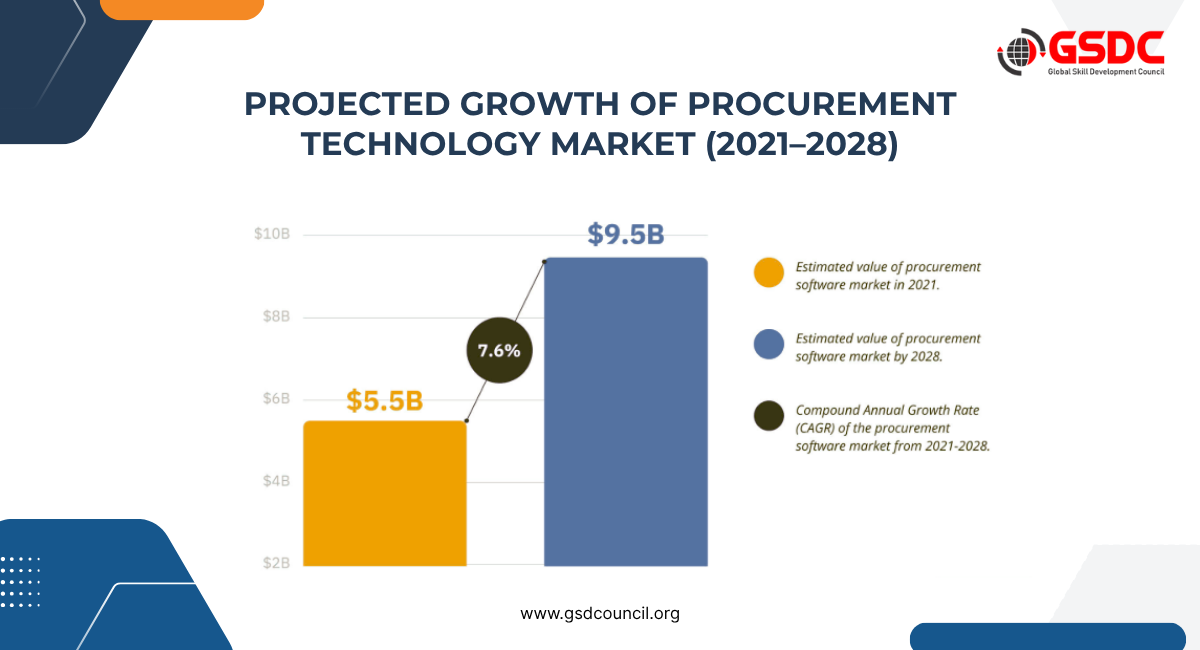 Recent industry findings show that:
- The shift towards digital procurement is accelerating across industries.
- Recent market analysis shows the global procurement software market growing from $5.5 billion in 2021 to $9.5 billion by 2028.
- This reflects a strong 7.6% annual growth rate, driven by demand for smarter tools.
- The surge highlights the increasing importance of procurement technology, procurement automation, and procurement analytics.
- It also reinforces why digital skills will be essential for procurement professionals by 2026.
What’s Driving These Changes?
To understand the future, we need to understand what's pushing procurement forward.
Several forces are reshaping the function.
- Global instability and unpredictable supply chains.
- Faster adoption of AI, automation, and procurement technology
- Rising ESG and sustainability expectations
- Stricter transparency and compliance rules
- The need for real-time visibility and forecasting
- A growing talent gap in digital procurement skills
These combined pressures make procurement more strategic and essential - accelerating a border procurement transformation across industries.
The Role of Procurement Professionals in 2026
As this transformation accelerates, procurement responsibilities are expanding significantly.
By 2026, the role will be more analytical, more digital, and more value-focused.
- Understanding Business Needs: Procurement begins with understanding what different teams need and planning purchases that align with long-term goals.
To understand what procurement is in business today, we must recognise its responsibilities now go far beyond purchasing.
Example: Meeting departments quarterly helps forecast needs and reduce rushed spending.
- Digital Supplier Research & Evaluation: AI tools now analyse supplier performance, risk levels, and pricing quickly.
Many professionals build these skills through the Certified Procurement Profession(CPP) certification, which helps strengthen their digital and strategic capabilities.
Many professionals build these skills through the Certified Procurement Professional (CPP) certification, which helps strengthen their digital and strategic capabilities.
- Smart Negotiation & Contracting: Digital contracting platforms provide benchmark insights and clearer contract visibility.
Example: Buyers can compare real-time market prices before entering a negotiation.
- Managing Procurement Workflows: Digitised workflows automate PO creation, approvals, and tracking, reducing delays and increasing transparency - a direct result of rising procurement automation.
- Vendor Relationship Management: Dashboards help track supplier KPIs, including on-time delivery, service quality, and contract compliance.
Example: When a supplier’s performance drops, procurement receives alerts to intervene proactively.
- Cost Management & Budget Efficiency: Teams analyse spend to find smarter savings without sacrificing quality.
- Risk & Compliance Management: Procurement must ensure suppliers meet ethical, legal, and sustainability requirements, using digital tools to detect risks early.
- Reporting & Spend Analytics: Analytics platforms turn spent data into clear insights, strengthening the role of procurement analytics in decision-making.
Procurement Challenges Expected in 2026
With expanding responsibilities come new complexities that procurement must navigate.
1. Supply Chain & Supplier Instability
Global disruptions - including climate events, political tensions, and shortages - continue to affect supply chains.
Industry reports show that long-lasting supply-chain disruptions now occur more frequently than in previous decades.
2. Rapid Cost Fluctuations
Price volatility in materials, logistics, and energy requires sharper forecasting and scenario planning.
3. Poor Visibility Without Digital Adoption
More than 70% of procurement teams report slow decision-making due to lack of real-time data and manual processes.
4. Increasing Compliance Pressure
Procurement now oversees complex compliance areas including ESG, labour standards, data security, and ethical sourcing.
5. Technology Gaps & Digital Skill Shortage
Even with more digital tools, many companies struggle with implementation and skilled talent.
87% plan to increase investment in procurement technology by 2026 - signalling an urgent need for digital proficiency.
Despite the availability of advanced procurement tools, many organisations struggle to adopt them fully. A growing digital skills gap highlights the need for structured capability development, and global bodies such as GSDC play an important role in setting recognised standards for procurement professionals.
Download the checklist for the following benefits:
⚙️ Get ready-made workflows, KPIs & automation guides.
⬇️ Grab your free toolkit today!
Essential Procurement Skills for 2026
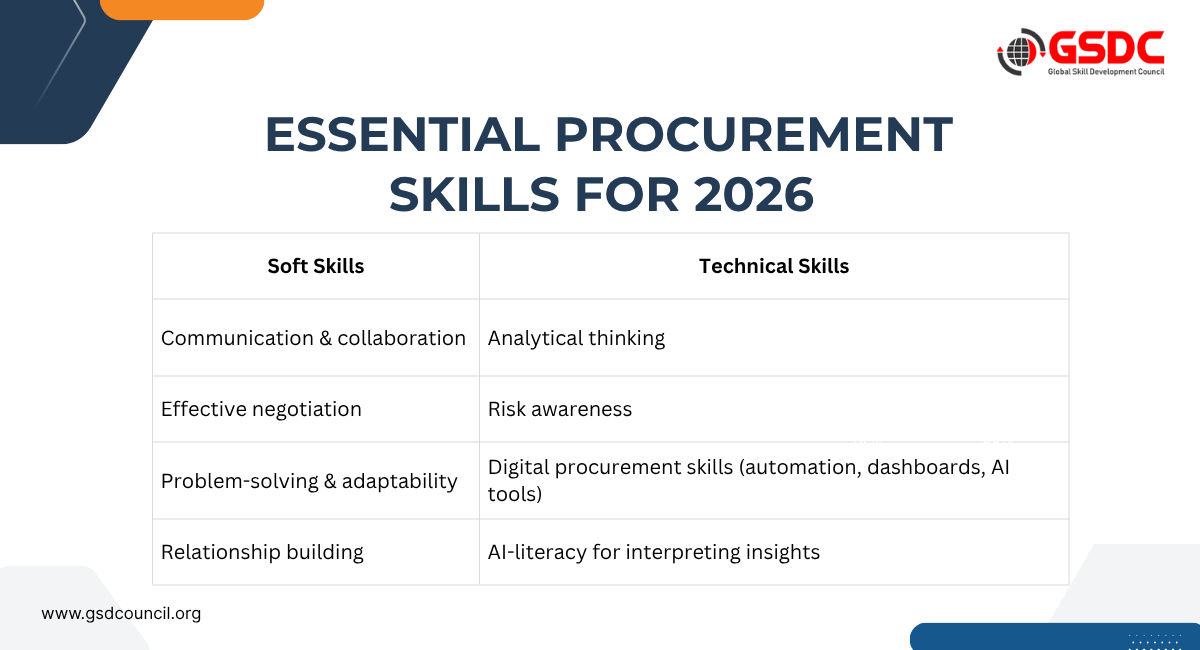
In order to flourish in a rapidly changing digital environment, procurement professionals must possess a well-rounded combination of both soft and technical skills.
Soft Skills
- Communication & Collaboration: One of the most important aspects of communication is clearly expressing ideas, goals, and strategies not only to the teams but also to the suppliers, thus building relationships that are beneficial to everyone.
- Effective Negotiation: Nowadays, negotiation depends heavily on data to provide insights rather than solely on experience-based judgment.
- Problem-Solving Skills: When faced with disruptions, it is the responsibility of procurement to not only respond quickly but also think of a creative solution.
Example: In case a main supplier is unable to provide a service, procurement should look for other sources right away so that the process continues smoothly.
Technical Skills
- Analytical Thinking: It is necessary to have the knowledge of what is revealed by the spend data, vendor KPIs, and industry trends.
- Risk Awareness: Those professionals should be able to detect not only financial but also operational and compliance risks at an early stage.
- Digital Procurement Skills: The use of automation, dashboards, and AI-enabled tools that are the main requirement.
Executives need to become "AI-literate decision-makers" who are capable of both interpreting and questioning AI insights.
The study has shown that companies opting for digital procurements can save up to 30% in operating expenses, primarily when automation and AI are highly integrated.
Procurement Trends for 2026
 There are several major trends that will shape procurement in the next era.
1. AI & Automation Everywhere
Procurement departments are using more and more predictive insights, automated workflows, and quicker supplier evaluation.
2. Sustainability Becomes Mandatory
Organizations are committing to ethically sourcing materials, tracking their carbon, and strictly following their ESG regulations.
3. Stronger Supply-Chain Resilience
Companies use flexible sourcing strategies and spread their supplier base to lessen the effects of market fluctuations.
4. Digital Procurement Platforms Rise
Cloud platforms are taking over from spreadsheets, thus enabling greater accuracy and real-time visibility.
5. Compliance & Cybersecurity Pressure Grows
The increase in digital transactions calls for more stringent supplier data and compliance practice monitoring.
How Procurement Professionals Can Prepare for 2026
Getting ready for 2026 means gradual, targeted growth rather than a sudden change.
1. Upskill in Digital Procurement Tools
One should be adept to the use of the various tools and technologies such as analytics dashboards, e-sourcing platforms, automation functions, and AI-driven insights.
2. Learn Modern Negotiation Methods
By the use of real-time benchmarks, market insights, and supplier data one can accomplish negotiation results that are even more powerful.
3. Strengthen Supplier Management
Regular KPI tracking and proactive communication are not only ways that can be used to enhance reliability but also to reduce risk.
4. Understand Sustainability & Compliance
The procurement department should be the first one to understand the impact of ESG and regulatory requirements on the purchasing process.
5. Build Adaptability & Analytical Thinking
Those who are professionals in rapidly changing markets conditions must be able to learn quickly and analyze information efficiently.
Procurement is becoming more digital, automated, and strategic - requiring professionals who can work confidently with new tools, data, and evolving business expectations. A certification helps you stay aligned with this shift by strengthening your fundamentals, improving your decision-making, and building the capability to handle modern procurement processes with greater accuracy and speed.
It also boosts your professional visibility. Certified professionals are seen as more prepared for leadership, better equipped to manage suppliers and contracts, and more capable of contributing to transformation initiatives. This is why many choose a Certified Procurement Professional Certification to stay competitive and future-ready, supported by global standards set by international bodies like GSDC.

Conclusion
As we move into 2026, procurement is becoming more digital, more strategic, and more fast-paced. Professionals who invest in key skills - from analytics to negotiation to digital fluency - will be the ones leading this transformation.
Continuous learning, including the right certification, provides a clear advantage. With the proper preparation, procurement professionals can shape the next era of the future of procurement.
If you're ready to strengthen your procurement career, now is the perfect time to begin your learning journey.

Related Certifications
Stay up-to-date with the latest news, trends, and resources in GSDC
If you like this read then make sure to check out our previous blogs: Cracking Onboarding Challenges: Fresher Success Unveiled
Not sure which certification to pursue? Our advisors will help you decide!